

• This offering is powered by W-HA. The wholly owned subsidiary of Orange, which holds banking licenses, draws on twenty years of experience in mobile payments.
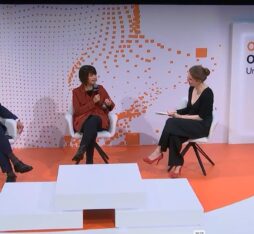
• Yann Serquin, W-HA’s marketing director, outlines Orange’s strategy and ambitions in the market.
Behind Orange’s tap-to-pay service is W-HA, “the group’s wholly-owned subsidiary that holds Orange’s banking licenses,” explains Yann Serquin, W-HA’s marketing director. Authorized as an electronic money institution and payment service provider, it is built on three pillars. The first is a long-standing service: payment via mobile carrier billing: “We use subscribers’ telecom bills to allow them to purchase digital goods and services, and we charge these purchases to their bill.” This activity is authorized under an exemption from the PSD2 directive, subject to strict limits: 50 euros per transaction and 300 euros per month. The second pillar, which is more recent, stems from the company’s accumulated expertise in electronic payments: Orange Money, a money transfer service from France, primarily to Africa. “It’s the same kind of business as what Western Union or MoneyGram do,” notes Yann Serquin. Operated and managed by W-HA, the service is posting double-digit growth. “By 2026, we expect to exceed one billion euros one billion euros in transaction volume.”
From Payment Terminals to Smartphones
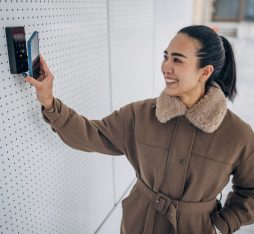
The third pillar encompasses traditional electronic payment offerings via payment terminals and e-commerce payments, to which tap-to-pay has been added in recent months. “It’s a technology that turns a smartphone into a payment terminal. We’re moving away from traditional terminals and hardware,” explains Yann Serquin. And it offers the same levels of security and the same guarantees as a traditional terminal. “We’re not the only ones offering this. What sets us apart is that Orange is behind it: it’s quite rare for a telecom company to offer this type of solution to its customers. That’s the real differentiator. ”
These solutions are aimed at very small businesses, entrepreneurs, freelancers, and artisans—with the underlying concept of mobility. “These are people who often have to accept payments far from their usual workplace, or directly at their customers’ locations.” The key selling point is how quickly it can be activated: all it takes is a SIREN number, and the account is opened in just a few minutes. “In the market, this can take several hours, or even several days or weeks.”
Reassuring users and their customers
In terms of pricing, Orange charges 1.49% per transaction, with a preferential rate of 0.99% for one year for new business owners who sign up through the operator. “We’re pretty well-positioned without slashing prices,” he notes. By way of comparison, Sum-up offers a rate of 1.75% in the same segment. Nevertheless, price isn’t the be-all and end-all: “This isn’t a very price-sensitive market. What small business owners want is reassurance: that the solution is well-known, reliable, and used by their peers. It’s a world where word of mouth plays a major role.” Hence the importance of branding: the app, currently marketed under a name that isn’t very recognizable, will be renamed in a few months to align more closely with the Orange brand.
Distribution relies on three channels: digital, which operates completely independently via the app; the 500 Orange stores in France; and—currently in development—partnerships with players in electronic billing and accounting tech, “who want to enhance their value proposition and offer services that complement their core business.” Finally, a payment processing module available as a white-label solution via SDK is under consideration.
A Long-Term Bet
The ambitions are clear: from 1,000 to 1,500 customers today, Orange is aiming for 50,000 by 2030. “The first two pillars of W-HA had Orange as their main client. Now, we’re breaking free to directly tap into new markets,” notes Yann Serquin. Orange intends to maintain its position as a pioneer: in 2013, Orange Cash introduced contactless payments via smartphone as part of a strategy firmly focused on “smart shopping”, “even before Apple Pay and Google Pay.” What’s next? To establish itself as a pure-play tap-to-pay provider and continuously enhance its offerings—for example, redeeming meal vouchers on an iPhone was the first such example. And tomorrow, perhaps, Wero. “What I’d like to see is Wero as a tap-to-pay solution,” he adds, referring to the Pix model in Brazil: backed by instant transfers, and thus much lower transaction fees.