● Orange Experts explain the work of anticipating, modelling and adapting infrastructure to withstand such hazards.
● Joint projects with EDF, Natran, SNCF and RTE are addressing the systemic challenge of the resilience of interdependent infrastructure networks.
In late November 2025, Airbus advised airlines to ground 6,000 A320 jetliners citing a risk that solar radiation, could corrupt digital data in their onboard equipment leading to critical software failures. Operating at much higher altitudes, electronic systems in satellites and telecommunications infrastructure are even more exposed to this form of interference, which is now a growing focus for scientific research: most recently a project by a team from NYU Abu Dhabi (NYUAD), which has developed an AI model that can forecast solar wind speeds up to four days in advance with a hitherto unprecedented level of accuracy.
The overall goal is to develop a tool to evaluate regional risks
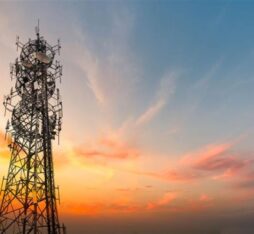
Solar storms, heat waves, floods, temperature spikes and grid instability are just some of the risk factors for telecoms networks, which, as senior Orange expert Nicolas Bihannic explains, are vital to the functioning of critical services and modern society: “There is an interdependency between telecom networks and other critical infrastructure such as power grids, and transport systems,” which means that failures in telecoms have wider consequences. As Orange networks expert Bertrand Decocq adds: “If our network goes down, the others will also be impacted.”
Resilience is now a topic of study, and in particular Orange is participating in coordinated research on cross-sector resilience. “We have already conducted projects with Orange France on the impact of climate change to determine what should be taken into account and when it becomes relevant (temperatures, floods, etc.). The overall goal is to develop a tool that will allow us to evaluate regional risks.”
Modelling, anticipating and adapting infrastructure: the drive to engineer future networks
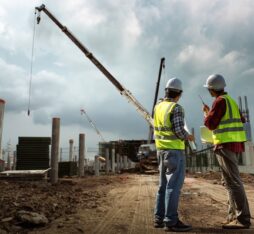
The Orange teams notably benefit from support from the CentraleSupélec Chair of “Risks and Resilience of Complex Systems,” which has mobilised a consortium that includes EDF, SNCF, Natran, RTE and Orange. The Chair aims to model and evaluate interdependent relationships between different infrastructure systems, facilitating optimization of maintenance while taking into account current and future impacts of climate change. “The goal is to investigate how to respond to situations that will affect infrastructure across several sectors,” explains Bertrand Decocq. This involves mapping of at-risk zones for phenomena such as floods, temperature increases and ground movements etc. These and other hazards are the focus of a custom-made tool used by Orange to determine areas that are most at risk from hazards such as landslides.
Solutions to enhance the resilience of networks need to predictively manage the runtime of backup batteries at mobile phone masts, monitor electrical power supplies in real time, and factor in interoperability between infrastructure operators along with recourse to satellites in affected areas. Measures such as relocating hardware, elevating network assets, and improving cooling systems, which involve significant financial trade-offs, need to demonstrate their added value. They require substantial investment that is not easy to monetize because “differences in terms of quality and resilience are not necessarily obvious to customers.”
Smart grids and sovereign challenges
An accumulation of climactic factors and geopolitical and energy risks is a constant challenge to network stability. “In Mali, infrastructure resilience is badly affected by grid instability,” explains Nicolas Bihannic. In certain areas, human intervention may be subject to geopolitical risks: “The armed conflict has made it exceedingly difficult to deploy technicians in the field. In cases like these, the aim is to provide more satellite connections and boost the security of power supplies, notably to maintain minimum services in the event of major failures.”
This economics-oriented system-wide approach often involves a rethink of financing and management models: “We look at other infrastructure operators, we share best practices, and we update our business models accordingly.” There are new sources of value at the nexus of different critical infrastructure networks. “Major investors don’t just invest in telecoms but also, for example, at the interface of telecoms and smart grids,” points out Nicolas Bihannic. More than just a technical issue, resilience is now a strategic and regulatory objective. Orange Group’s joint project with Enedis on a future crisis network, which involved the sharing of assets and the analysis of operational challenges, is an example of collaboration of this kind.
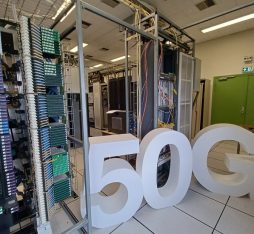
The drive to optimize the management and coordination of this interdependence also involves work to improve international standards (3GPP, etc.). “We are working to ensure that the development of standards keeps pace with the development of interfaces,” concludes Nicolas Bihannic, who emphasizes the need for the real-time sharing of critical information on the status of infrastructure networks.
 Nicolas Bihannic
Bertrand Decocq
Nicolas Bihannic
Bertrand Decocq