

• Rethinking processes with AI also means redefining the role of humans: the tasks they perform, but above all the decisions and responsibilities that should fall to them.
• The shift from assistants to AI agents makes governance that is built in from the design phase essential: security, data control, bias, and human oversight must be part of the process.
Integrating artificial intelligence and becoming an “AI-first” company are two very different things. And this is precisely where companies can go astray.
Take the example of an electric car: in its design process, you don’t start with a gas-powered car and simply replace its engine. In fact, the architecture and design are completely reimagined. With AI, the same principle applies: simply adding a few AI building blocks to processes designed for a different world will not allow you to realize its full potential.
At Orange, becoming an “AI-first” company has led us to ask ourselves what kind of experience we want to create—whether for customers, employees, partners, developers, and so on. Only then can we rethink the workflow and identify what AI can handle before determining what must remain under human control.
An “AI-first” strategy involves empowering employees
I realize this approach may seem very technical, but it is actually deeply human.
In almost every profession, certain tasks energize us. This happens when we use our imagination, when we solve a problem, when we create, or when we share our expertise with others. Conversely, there are tasks that consume time and attention without stimulating employees. AI, precisely, offers a solution that eliminates these friction points and gives each individual more space and freedom to create.
AI first does not mean people second
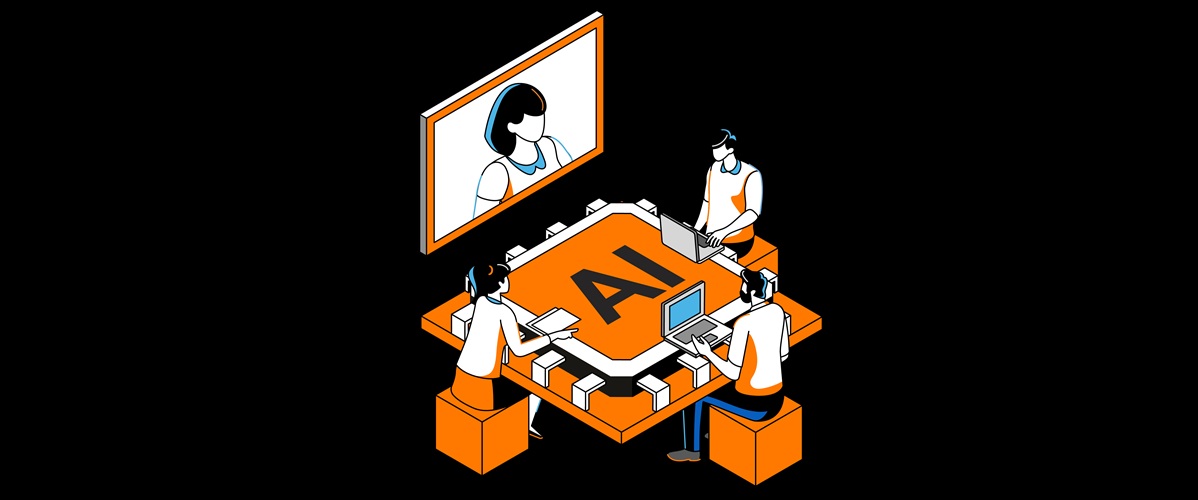
That is why I maintain that “AI first” does not mean “people second.” Yes, we need to rethink processes around AI, and this requires us to anticipate and understand the role we want to give employees. It requires us to decide which decisions should be left to them. This is a fundamental transformation that goes far beyond the choice of language models or AI tools. It affects workflows, the customer experience, operations, and even business models. Artificial intelligence is becoming a subject at the intersection of technology and business.
Gradually transitioning from assistant to agent
At Orange, artificial intelligence has always been well received because we’ve supported employees in adopting this technology. Today, 90% of employees use Live Intelligence, and they’ve created more than 18,000 assistants in its library. Our next step is to develop agents capable of handling certain daily tasks beyond simple assistance.
The more technological autonomy there is, the more the issue of trust becomes central. Security, governance, data control, bias management, and human oversight therefore cannot be addressed after agents have been deployed. They must be considered beforehand, integrated into the design, and even incorporated into new processes.
Becoming an “AI-first” company isn’t just about using AI to solve isolated problems—it means being willing to rethink how a company operates as a whole. It means defining what we want to achieve, what we can entrust to machines, and, above all, where human intelligence, creativity, and responsibility must continue to make the difference.
This text has been translated by an artificial intelligence.
 Usman Javaid