• Educational workshops in Scotland, a wide range of research projects (notably at Orange), programmes like #ForGoodConnections that inform parents and children, and recent French legislation that bans under-15s from using social media: solutions are emerging but how effective are they?
• Calling for more than just technical progress, Orange researcher Erwan Le Quentrec argues that young people need to develop a critical awareness to enable them cope with today’s digital environments.
According to researchers for the CNRS Laboratory for the Psychology of Child Development and Education (LaPsyDÉ), teenagers’ ability to spot fake news improves as they grow older, but remains limited up until 12-13 years of age. To investigate how their discernment evolves, the team recruited 432 children aged 11-14 years, who were asked to rate the accuracy of 56 real and fake news items presented without identifiable sources in a manner similar to social media posts. The results demonstrated that older participants regardless of their gender were better able to spot false information. “The development of media truth discernment and fake news detection is related to the development of reasoning during adolescence,” explain the researchers. They also suggest different approaches to encourage critical thinking including training teachers to recognise cognitive biases, notably the illusory truth effect (the perception that repeated news is more accurate than novel news), which affects people of all ages. In their view, school curricula should be adapted to include the media literacy, while platforms need to be held accountable for age verification and content moderation.
In an article titled “The scourge of manipulation: how can we combat deepfakes?”, Célia Zolynski, an associate professor of Private Law at Université Paris 1 Panthéon-Sorbonne, points out that in 2023, 98% of manipulated videos accessible online were sexual in nature, and most targeted women. She further argues: “Awareness campaigns are insufficient, yet they are essential to protect and help children and prevent their isolation.”
Most children did not fact-check information by cross-referencing what they read with other news sources. They relied instead on their intuition.
Educators and police collaborate on initiatives in Scotland
In the United Kingdom, Yvonne Skipper, a senior lecturer at the University of Glasgow, organised focus groups with 11- to 14-year-olds to ask them their views on misinformation. “I found that the young people in the study tended to – wrongly – believe that misinformation was only about world events and scams. Because of this, they believed that they personally did not see a lot of misinformation,” she explains in an article published in The Conversation. She further noted different levels of confidence with regard to teens’ ability to spot misinformation. “Most did not fact-check information by cross-referencing what they read with other news sources. They relied instead on their intuition – “You just see it, you know” – or looked at what others said in comment sections to spot misinformation. But neither of these strategies is likely to be particularly reliable.” In the light of these findings, Skipper and her colleagues created a project to help young people develop the skills they need to spot misinformation. for the project were developed in collaboration with Police Scotland and Education Scotland to ensure that materials were “grounded in real-world challenges and informed by the needs of teachers and other adult professionals.”
Orange raises awareness among young people to encourage positive and safe use of online resources
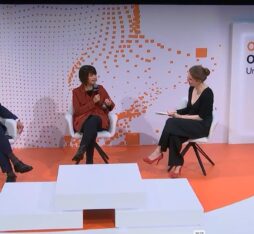
Within the framework of its #ForGoodConnections programme for young people, Orange has joined forces with a range of civil society stakeholders to provide young people with guidance on navigating digital environments. Workshops organised by the initiative focus on child safety themes and the prevention technological risks (cyberbullying, fake news, screen-time management, and the protection of personal data). “The objective of these middle school workshops is to empower students to critically analyse news in the era of social media by giving them tools to confidently navigate the Internet, so that they understand the functioning of algorithms and virality and are unlikely to be duped by fake news and deepfakes,” points out Erwan Le Quentrec, a team manager and researcher at Orange Labs Department of Sociology and Economics of Networks and Services (SENSE). “For example, it is important to explain the different types of biases that can be reinforced by algorithms not only to children but to people of all ages. I am thinking in particular of confirmation bias, which is the tendency to seek out, interpret, and favour news that confirms our prior beliefs and values, while ignoring or downplaying information that contradicts them. It is a problem that is amplified by platforms, which filter and push content that is aligned with our browsing history preferences, and by affective communities built on shared affinities that exclude divergent perspectives. Environments where information circulates among people who already agree with each other stifle adversarial debate and make it more difficult to detect and verify fake news. One way of addressing this problem is to foster a culture of critical thinking among children in middle school and even in primary school by organizing debates on complex issues that expose them to a plurality of viewpoints.” It is an approach that is very familiar to researchers as a primary driver of scientific method.
“In fact, it is important to point out that the way young people engage with technology and specifically with digital media and computerized tools has been researched and studied for quite some time. Of course, there’s no denying that the landscape has changed radically with the rise of social media ecosystems run by global giants. However, regardless of these technological changes, a fundamental question remains: how can we equip young people with the critical culture they need to make positive use of these new environments? It is a point that needs to be addressed by those advocating purely techno-centric solutions and even outright bans… neither of which have yet provided tangible evidence of achieving wider goals, such as improving adolescent mental health. The leadership at Orange France, who are driving the #ForGoodConnections initiative, have partnered with us to conduct an impact assessment of these workshops. The next step in this process will be the launch of a qualitative study involving a multi-disciplinary team researchers led by the University of Caen.”
The researchers will aim to provide answers to the following questions:
- How do the workshops provide positive support for adolescent information and communications technology (ICT) usage
- In a broader context, what other measures or initiatives have been implemented within the participating schools to achieve this goal?
- How is this issue conceptualized within these educational institutions?
- What are the prevailing perceptions among adults regarding students’ digital habits?
- What do the students think of the ‘moral panic’ exhibited by adults?
- How do parents provide support and negotiate with their children about their technology use?
- How do educators provide guidance to these young people?
Faced with the omnipresence of AI and social media, will these initiatives be enough to equip adolescents against misinformation and other forms of digital misuse? The answer will almost certainly depend on the collective commitment of everyone involved: educators, families, and regulators alike.
 Erwan Le Quentrec