

● According to Gartner, the global market for digital twins is expected to grow by 41% annually, reaching $428 billion by 2034, driven by convergence with AI agents, which will orchestrate 10% of key production and maintenance operations by 2030.
● This paradigm shift is as much cultural as it is technological: the digital twin is no longer used for observation, but for real-time decision-making.
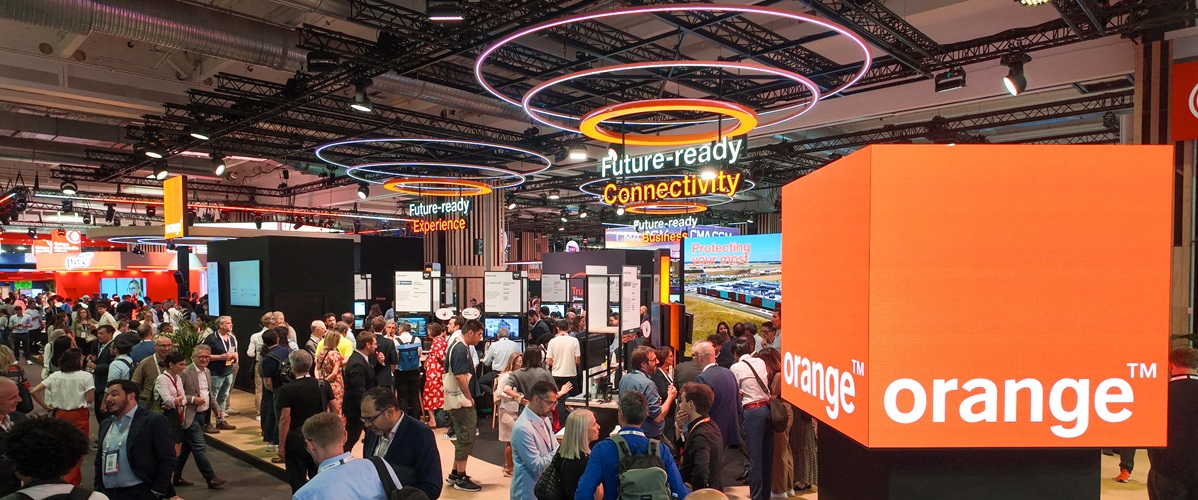
A technician asks a question in natural language to their monitoring system, and within seconds, the digital twin analyzes, simulates, and formulates recommendations under the technicians’ supervision. Alternatively, the technician can display technical details that are otherwise hidden or geolocated guidance on the procedure to follow as an overlay on their phone. This is what Orange is showcasing at VivaTech 2026 with Network Digital Twins: the digital twin is now more than just a visualization tool. It has become the operating system for smart infrastructure.
The digital twin is becoming more than just a simple visualization tool. It has become the operating system of smart infrastructure.
A telecom network has become one of the most complex assets to monitor: we’re talking about thousands of heterogeneous devices, fragmented data, and costly field interventions. Network Digital Twins addresses this challenge by unifying access and transport networks into a single twin, powered by field data, computer vision, and drone footage. Teams can query the network’s status using natural language, simulate a failure before it occurs, prepare for a service call without traveling to the site, view geolocated data—including information that might otherwise be hidden from the technician during a field visit—and more. The result: faster service calls, more precise equipment location, reduced travel, and consequently a lower carbon footprint.
A Market in Flux
According to the Gartner Manufacturing Predicts 2026 report, semi-autonomous AI agents will orchestrate 10% of key production, quality, and maintenance operations by 2030, up from 2% today. The global market for digital twins, meanwhile, is projected to grow by 41% annually, reaching $428 billion by 2034. Yet digital twins have long been limited to a single physical asset. The challenge lies in scaling up. In fact, real-world industrial processes involve multiple actors and systems, and a single, isolated twin cannot capture this complexity. The barriers identified by manufacturers are often the same: data silos, high costs, and a lack of skills. This is where convergence with AI agents comes into play.
Agent-based AI in a port
For its part, Orange’s generative AI tool, Live Intelligence, takes this concept a step further: connecting AI agents to a digital twin in a critical industrial environment. At VivaTech, the demonstration takes place within the digital twin of a port area. How can supply chain disruptions be reduced? How can we limit the risk of accidents caused by concurrent operations? The operator issues commands in natural language and maintains control at all times. The operator makes decisions, while the system anticipates them. With partner Wearin’, it’s possible to upload field data from the teams. Another player, Ensemble Analytics, facilitates the orchestration of the agents.
This text has been translated by an artificial intelligence.